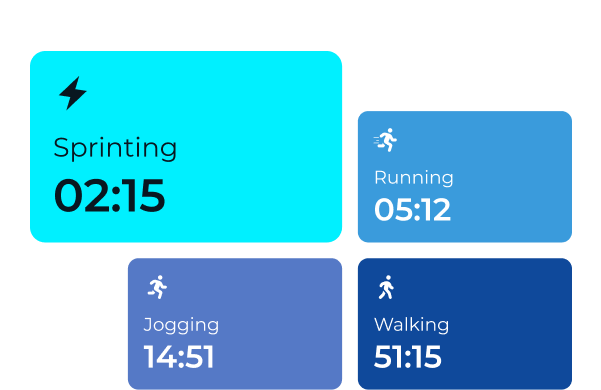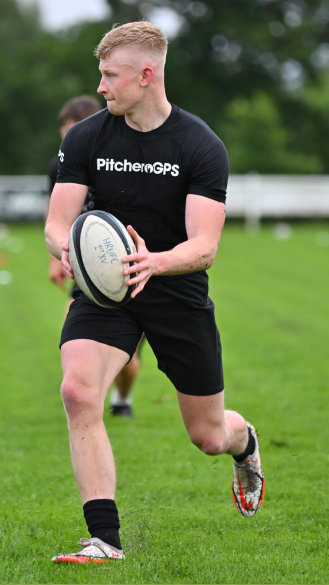





Speed is important across rugby, but its demands vary considerably by position and phase of play. Outside backs may accumulate more high-speed running and sprint exposure, while forwards typically perform more repeated accelerations, decelerations and contact-related efforts.
GPS Tracker for Rugby Players and Teams
An introduction to
Phil Greening
As a player Phil represented Gloucester, Sale, Wasps, England and the British & Irish Lions. He consults with the US Olympic Committee and USA Rugby. Phil has worked in performance in the USA for over 10 years bringing the Rugby 7s teams from relegation to HSBC World Series contenders.
Phil has coached at 2 Olympic Games, 2 Pan Am Games and steered the 15s team to their first ever ARC title. His experience in elite sports and desire to explore everything to do with performance allows him to give coaches and players the insight knowledge and techniques that will guide them on their journey.
Why Phil uses GPS
"GPS technology is an essential tool for tracking the performance of both players and teams. By providing accurate data on player movements and the demands of the game, I can build tailored plans for individuals and teams. For me, the most important element is influencing player behaviours during training, which directly impacts their performance in matches.
This data-driven approach not only boosts players' confidence but also enhances their understanding of what it takes to be successful on the pitch. With GPS insights, we can identify areas for improvement, adjust training intensity, and ensure that players are meeting the physical and tactical demands of the game."
Phil Greening
How Rugby Players Benefit from GPS Trackers
Discover how every rugby player can enhance their game by wearing a GPS Player Vest. GPS trackers capture crucial data aligned with the three cornerstones of rugby performance: Speed, Distance, and Intensity. These metrics provide a clear path for players to consistently push their boundaries and reach new personal records on the pitch, becoming stronger, fitter, and faster rugby player. Delve deeper into how our GPS rugby trackers operate and the vital information they collect.
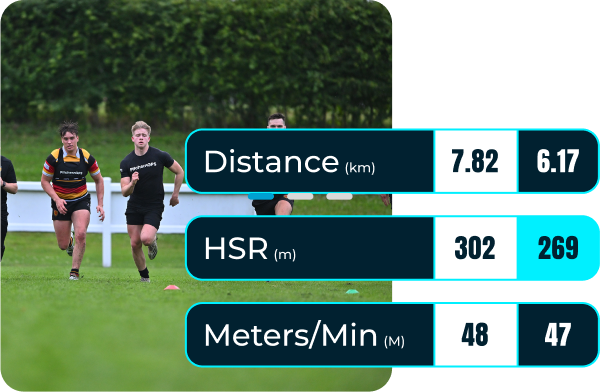
Total distance gives important context around the overall running demands placed on a rugby player during training and matches. Comparing distance alongside playing time, high-speed running and position can provide a more meaningful picture than distance alone.
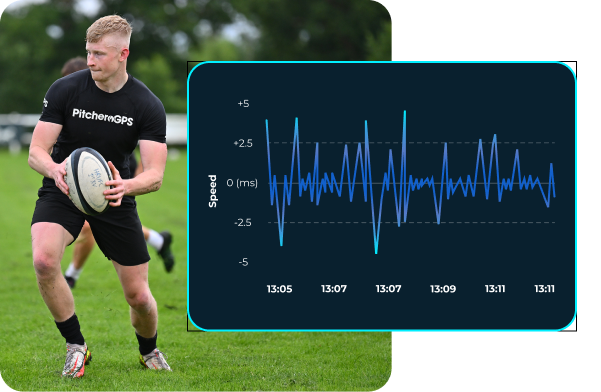
Rugby performance is characterised by repeated changes in speed, direction and work rate. Tracking accelerations, decelerations and high-speed running helps players and coaches understand the intensity of those movements throughout training and match play.
A single training session or match only shows part of a player's workload. Cumulative Load brings data from multiple PitcheroGPS sessions together, helping players and coaches understand how training and match demands develop over time.
GLOBALLY APPROVED
World Rugby Approved
World Rugby approves the PitcheroGPS Player Tracker for use at all levels of competition. From grassroots all the way up to Premiership Rugby.
This global certification means World Rugby rigorously tested the PitcheroGPS Player Tracker for safety and approved its use in all levels of sport.
The Metrics GPS Trackers Record
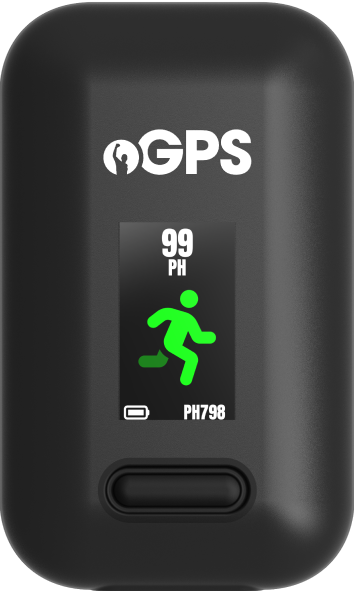
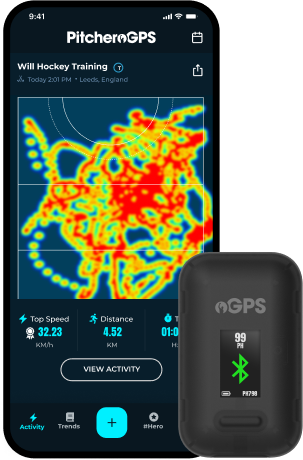
PitcheroGPS is the go-to device for revolutionising your performance on the rugby pitch. This device captures all essential metrics, assisting you to push your limits on the pitch. It allows you to gauge the Total Distance you cover during games or training, to understand how often you're hitting Top Speed, and visually map your on-field movements with user-friendly heat maps.
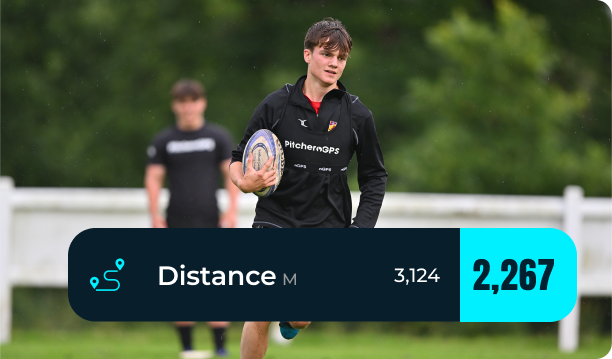
Total Distance
Total Distance
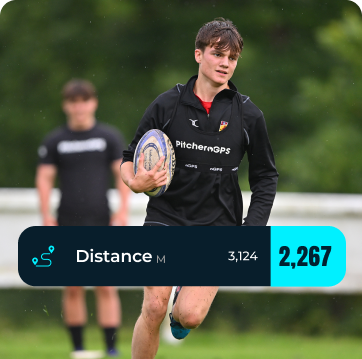
Monitoring total distance is a key metric that our tracker provides rugby players, offering significant data about a player's game stamina and improvement over the course of a season.
Key benefits include:
- Assessing endurance and fatigue levels
- Building a profile of player's stamina
- Supplying accurate distance data
Top Speed
Top Speed
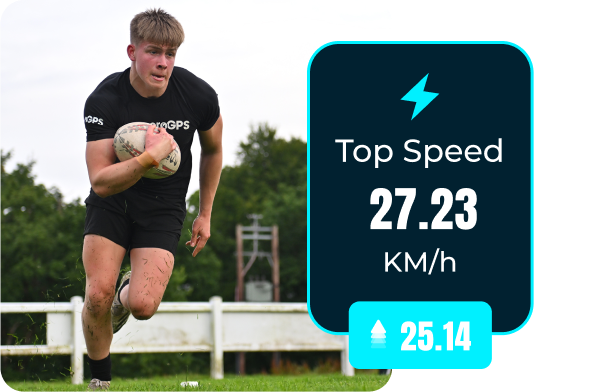
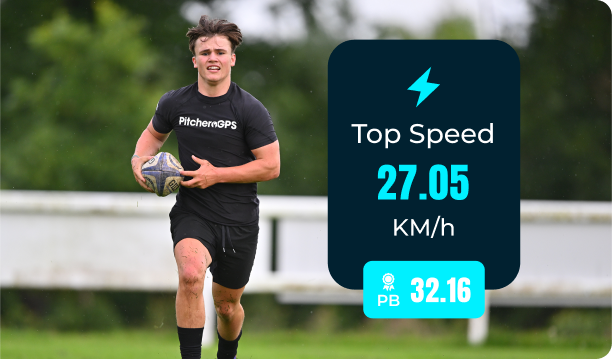
Monitoring top speed can be a game changer in rugby, providing vital data on a player's top speed, fitness, and overall performance.
Key benefits include:
- Evaluating how often you hit top speed
- Comparing your top speed between matches
- Help track improvements to your speed
Acceleration / Deceleration
Monitoring accelerations and decelerations in rugby delivers insightful metrics on a player's quickness and fitness.
Key benefits include:
- Evaluates player's endurance towards the latter part of the match
- Aids in tailoring speed-oriented training
Total Active Time
Total Active Time
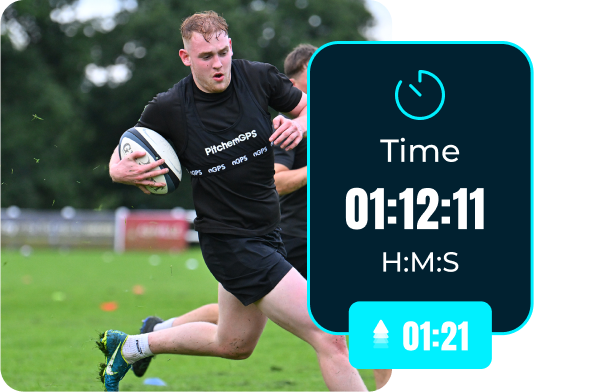
Observing total active time in rugby gives insights into how much time is spent working at a high rate of intensity during training or a match
Key benefits include:
- Improving player's stamina and fitness
- Detailed assessment of player workload
High Speed Running
High Speed Running
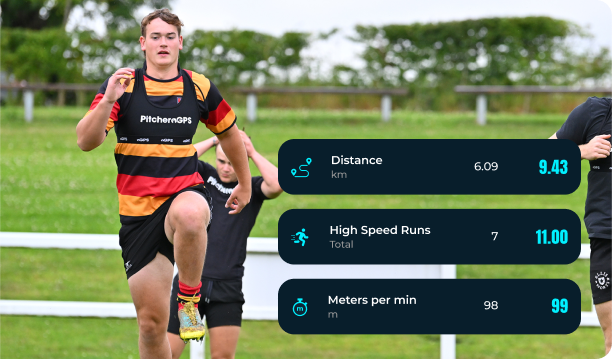
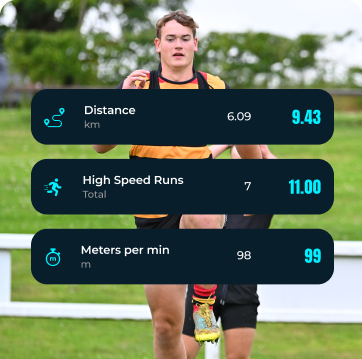
Being able to sprint is an important skill in rugby. Know your intensity levels in both training and matches.
In the PitcheroGPS rugby tracking app, you can configure:
- Custom speed zones for all abilities and ages
- The name of each speed zone
- The value of each banding
- Up to 8 speed bands
Impacts
Impacts
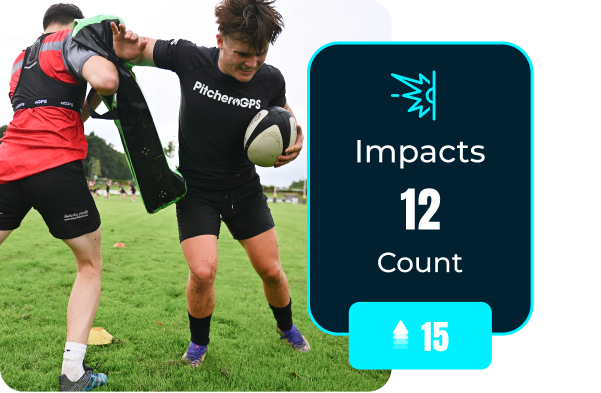
n rugby, the sport is defined by tackles and collisions. Our GPS tracker measures and records the number and g-force of impacts a player encounters during a match.
Key benefits include:
- Monitor the number of tackles a player makes
- Adjust impact thresholds by age group
- Data can inform timely player substitutions
GPS Trackers for Rugby FAQ
PitcheroGPS tracks the key physical metrics behind rugby performance, including total distance, top speed, high-speed running, accelerations, decelerations, impacts, active time and workload. After each training session or match, the data can be analysed in the PitcheroGPS app to compare performance over time.
Yes. The PitcheroGPS tracker is approved by World Rugby for use in competitive rugby, making it suitable for training and matchday use across different levels of the game.
GPS tracking gives players objective data from every training session and match. It helps show how far you ran, how fast you moved, how intense the session was and how your workload compares with previous performances.
Coaches can use PitcheroGPS to compare players, understand the physical demands of training and matches, review session intensity and monitor how workload changes across the season.
Cumulative Load combines data from multiple training sessions and matches to show how a player’s workload builds over time. It allows players and coaches to compare recent workload with longer-term patterns rather than looking at each session in isolation.
Yes. PitcheroGPS records impacts above a chosen G-force threshold, helping players and coaches understand the contact demands of a training session or match. Impact thresholds can be adjusted to suit different players, age groups or environments.
Yes. PitcheroGPS allows you to compare metrics such as total distance, top speed, high-speed running, accelerations, decelerations, impacts and workload across training sessions and matches.
Yes. PitcheroGPS uses data from each session to help players and coaches understand physical workload. Cumulative Load also shows how workload develops across multiple sessions and matches over time.
No. PitcheroGPS records performance data while you train or play. Once the session has finished, the data is transferred to the PitcheroGPS app for analysis.
Yes. PitcheroGPS can be used by players across different rugby positions. Because the physical demands of each position can vary, GPS data can help players and coaches compare individual performance and workload in the context of their role
Yes. The PitcheroGPS Player Bundle is designed for individual players who want to record and analyse their own training and match performance through the Player App.
Yes. The PitcheroGPS Team Bundle is designed for rugby clubs, academies, schools, colleges and teams that want to track multiple players and analyse squad performance from one Team App.